
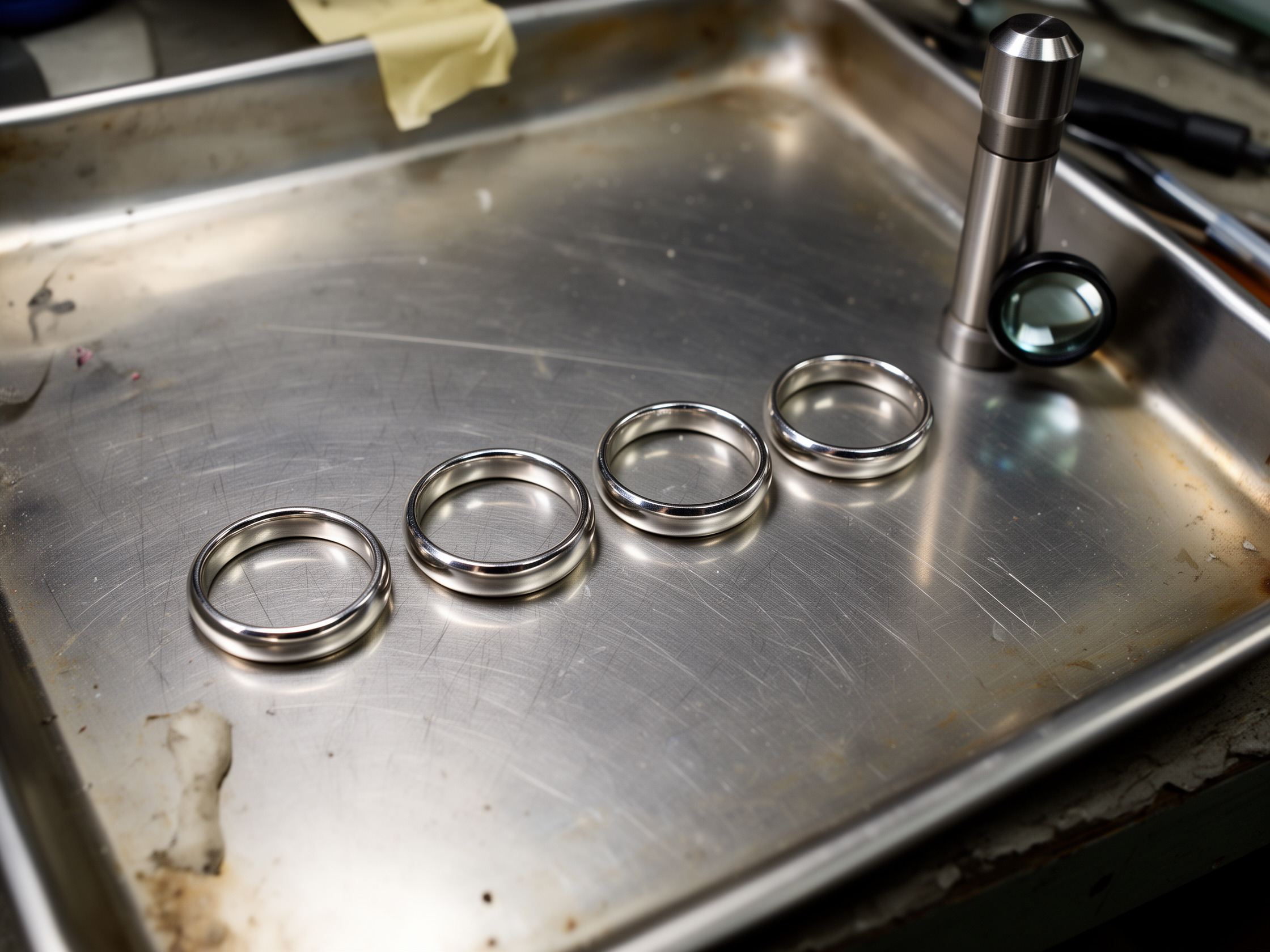
What 925 means on a specification
A 925 mark states that the alloy contains 92.5% silver by weight; the remaining 7.5% is usually copper, added to give the metal enough hardness for daily wear. Sterling silver describes the same alloy, so a supplier quoting sterling and a supplier quoting 925 are normally offering the same material.
The mark alone does not tell you how the alloy was tested or how much a finished piece weighs. Ask for the material line in the quotation to state alloy, silver content, weight per piece and the test method used, so two offers can be compared line by line.
Reading a supplier spec sheet
A useful spec sheet repeats the same four fields for every style: alloy, weight, plating and findings. Findings matter because clasps, posts and earring backs are often a different base metal, and on silver jewelry they are the parts most likely to fail a nickel or tarnish check.
Where a style mixes materials, the spec should list each component separately. That is also the basis for the material declaration used in customs paperwork and, in the EU, for the product information your packaging has to carry.
Comparing quotations on the same basis
Price per piece is only comparable when weight, plating thickness, findings and packaging are identical. A lower quote frequently reflects a lighter piece or a thinner plating layer rather than a better factory rate.
Before placing a bulk order, confirm the approved sample is measured and photographed, and attach that record to the purchase order. The record becomes the reference for the incoming inspection of the production lot.