
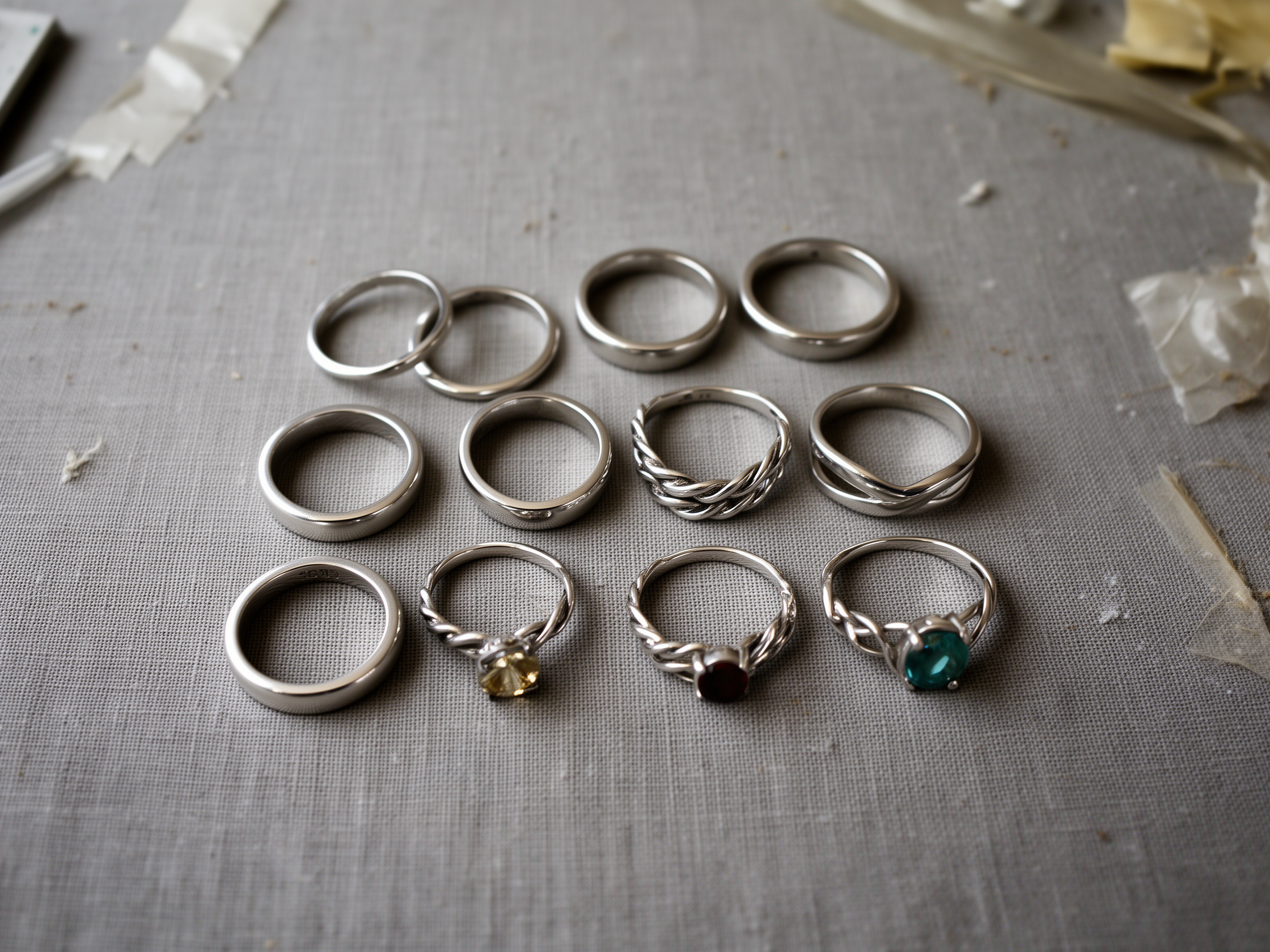
What each material actually is
Sterling silver is 92.5 percent silver, usually alloyed with copper. It is homogeneous: the colour runs through the piece, apart from any plating applied on top.
White gold is gold alloyed with white metals such as palladium or silver, and often plated with rhodium to reach a bright white. The gold content is stated in karats, commonly 14k or 18k.
The practical consequence is that white gold carries a gold price and silver does not, and both may depend on a rhodium layer for their final colour.
Colour, hardness and wear
White gold is harder and resists scratching better in daily wear. Sterling silver is softer and shows marks sooner, especially on high-polish surfaces.
Both can wear through their rhodium plating. On white gold the exposed alloy looks slightly yellow; on silver it looks like tarnished silver.
For pieces worn daily, such as wedding bands, the durability difference is real. For fashion and gift items rotated through a wardrobe, it matters far less.
Price, margin and stock risk
Gold prices move, and a white gold line ties up more capital per unit. Silver keeps the entry price low and leaves room for retail pricing at accessible levels.
Higher unit cost also raises the cost of being wrong: a slow-selling white gold style ties up more money than the same style in silver.
For a first range, silver carries less inventory risk and lets you test shapes and finishes before committing to precious metal.
Maintenance and returns
White gold usually needs re-plating every one to three years depending on wear. That service is expected by the customer and should be priced or explained up front.
Silver can be re-plated or polished, and a tarnished piece can often be restored by the customer with a cloth. Care instructions reduce the number of pieces that come back.
Whatever the metal, agree the plating specification with the supplier. Re-plating cost and turnaround are part of the total cost of the line.
How to split a collection
Put white gold where the purchase is emotional and long-term: bridal, anniversary, heirloom-style pieces. Put silver where the purchase is seasonal, layered or gift-driven.
Keep the visual language consistent across both. The same silhouette in silver and white gold lets a customer trade up without leaving the range.
If you are testing a new shape, launch it in silver first. Once it sells, add the white gold version rather than guessing on both at once.