
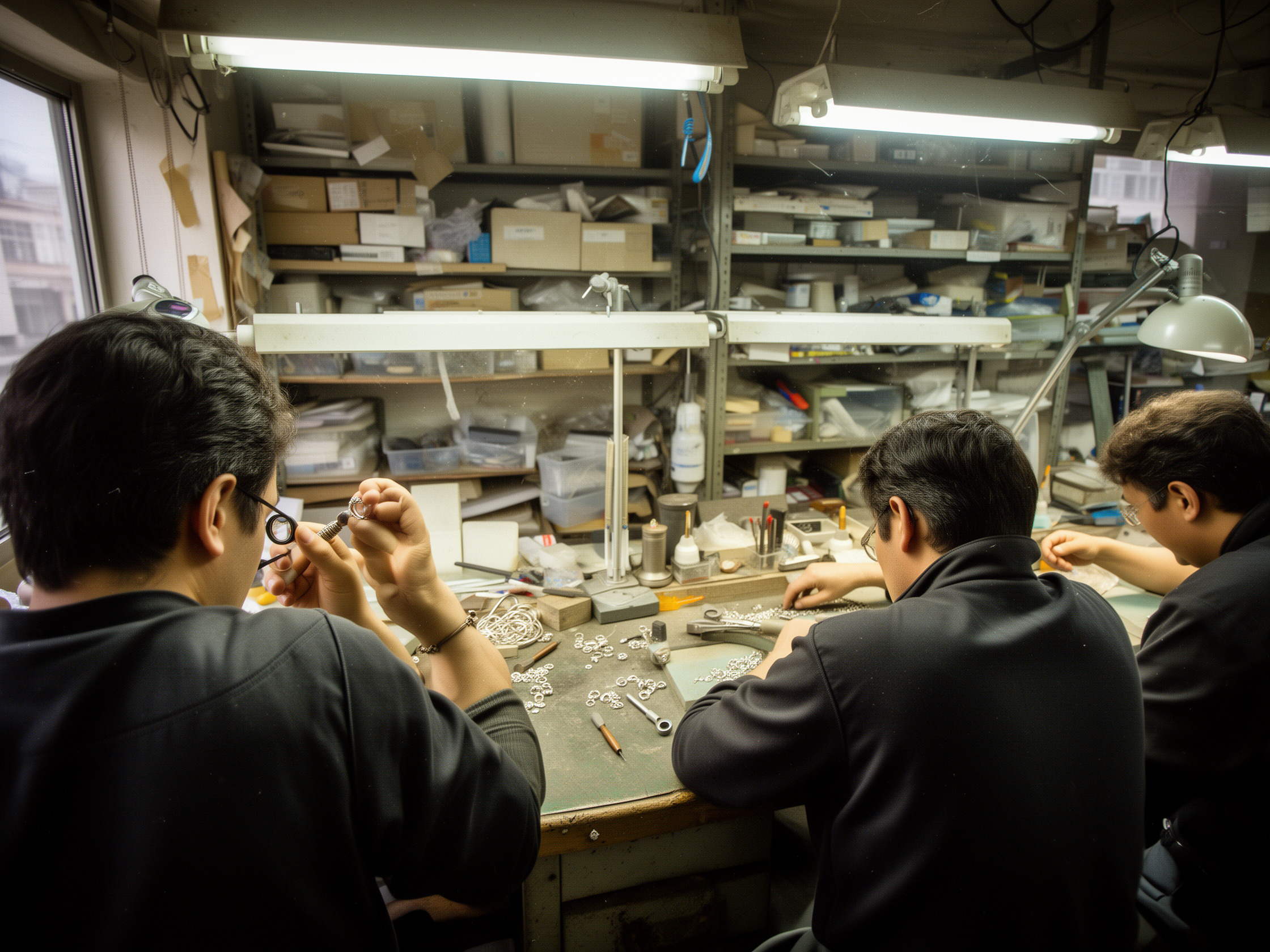
Brief and feasibility
The brief fixes five points: category, quantity per style, finish, target market and packaging. Send reference images with the brief; a photo of the finish you want removes most of the ambiguity that otherwise appears at sampling.
Feasibility is confirmed against those five points, including the minimum of 6 styles at 12 pieces per style. If the launch plan is smaller, the order is usually consolidated with proven styles rather than reduced below the minimum.
Sampling and approval
Sampling turns the brief into a physical reference. CAD or a render comes first when the design is new; a stock style can go straight to a sample. Sample fees and timing are confirmed in the quotation because both depend on the model and the finish.
Approval should cover weight, dimensions, plating colour, setting security and packaging. Sign off on a measured, photographed sample and keep it as the golden sample for the bulk run.
Bulk production
Bulk starts with material preparation and casting, then filing, assembly, setting, polishing and plating. Each stage is checked against the approved sample, and the finished lot goes through a final inspection before packing.
Packing, carton data and shipping documents are prepared while production finishes, so the shipment is not waiting on paperwork. The shipping route and Incoterm are confirmed in the quotation.
Where orders lose time
Orders rarely lose time in production. They lose it in unapproved artwork, late packaging files, a size curve changed after casting, and samples approved without measurements.
Locking the brief, artwork and size curve before sample approval removes most of the delay; a launch date with a small buffer covers the rest.